Case Study · Netherlands · 2025

How five Dutch stores turned shoe take-back into a customer acquisition channel

A 5-month pilot across RunnersWorld and INTERSPORT stores. 600+ customers. 750+ pairs scanned. Email capture at a fraction of paid media cost. No additional burden on store teams.

600+
Customers participated
750+
Pairs scanned in-store
€1–3
Cost per email captured
5
Stores, 2 retail brands
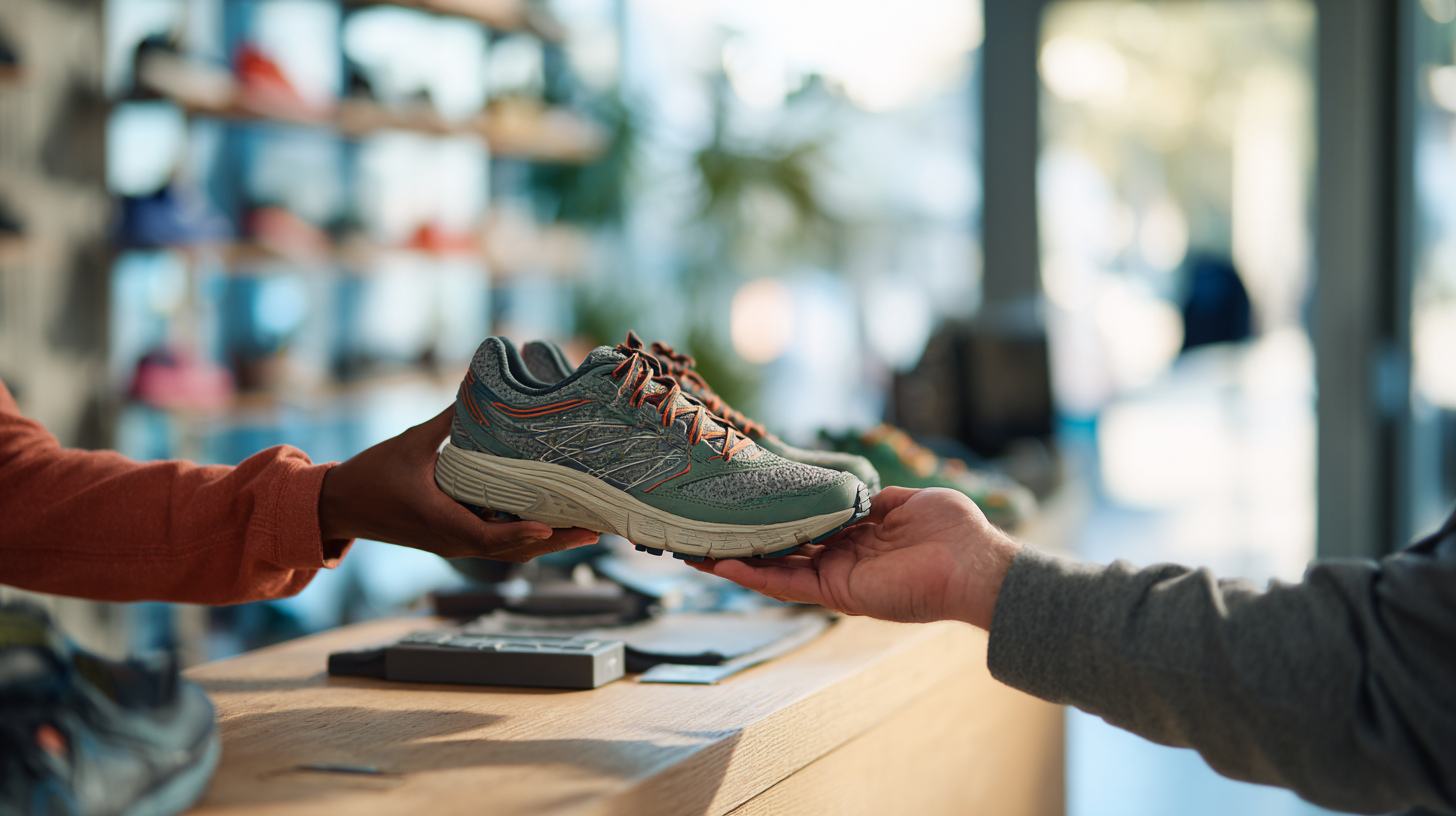
Inside a modern sporting goods store with take-back programme
The partners

Three organisations, one pilot

RunnersWorld & INTERSPORT
Part of EK Netherlands. Five stores, starting with Hoorn and Eindhoven — including the launch of The Loop circular concept store.
FastFeetGrinded
Recycling partner since 2016. 100,000+ pairs processed with RunnersWorld. Handles collection, sorting, and material recovery.
Utilitarian
Consumer-facing take-back app, product-level data capture, CRM integration, and recycler tracking. Poster + QR code — no IT integration.
Before the pilot

Take-back was already happening. Connection and control were missing.

RunnersWorld has collected shoes with FastFeetGrinded since 2016 — an estimated 100,000+ pairs. Customers brought in old shoes, store teams boxed them, FastFeetGrinded collected. A weight report came back. The interaction ended there.

No customer identity
Returns were anonymous. No way to follow up, re-engage, or measure behaviour.
No product data
No brand, model, or category breakdown. Just total weight collected.
No commercial return
The programme cost money to run but generated no marketing or CRM value.
No visibility for head office
No reporting beyond a weight figure. No way to measure impact at store level.
What we changed

A poster in-store. A 20-second interaction. Everything else stays the same.

We added a data layer to the moment that was already happening. The customer still hands in their shoes. The box still goes to FastFeetGrinded. What changed is what happens in between.

The customer journey — ~20 seconds

1
See poster
In-store QR code
2
Scan & snap
Mobile web, no app
3
Brand & email
Takes seconds
4
Thank you email
Discount + store link
5
Hand in shoes
As they already do

Deployment

Timeline
Live within weeks of kickoff
Hoorn and Eindhoven first, additional stores rolling out over the following weeks.
Store setup
A poster with a QR code
No hardware, no app installation, no IT integration.
Staff training
None required
Customer self-serves via their phone. Store teams continue as normal.
IT integration
None
Platform runs standalone. Dashboard + export. CRM connection available but not required.
The results

Five months, five stores, measurable outcomes

600+
Customers participated
750+
Pairs scanned
with product-level data
€1–3
Cost per email
vs €12–31 paid channels
5 brands
~75% of scanned shoes
Product-level insight no other channel provides
Repeat visits
Customers returning to collect rewards

The pilot resulted in a committed partnership for 2026, with expansion across additional stores and product categories.

Value delivered

One programme, four teams served

Marketing
Email subscribers at €1–3 each with brand and category data attached. A new owned channel with purchase intent signal built in. Repeat visit behaviour driven by incentive redemption.
Sustainability
Product-level take-back data structured for CSRD and EPR reporting. Auditable traceability from consumer interaction to circular outcome.
Operations
Zero additional burden on store teams. No staff training, no new devices, no IT integration. Runs on a poster and a QR code. Customers self-serve.
Recycler (FastFeetGrinded)
Product-level visibility into what's being collected — not just weight. A richer service offering for retail clients as the programme scales.
What the partners said

In their own words

"The steps were self-explanatory. Customers responded positively. Customers are very curious about what actually happens to the shoes."
Wim
Entrepreneur, Intersport Ermelo
"We even see customers coming back specifically to hand in their shoes and collect their reward — which shows the system is working very well in terms of building loyalty and repeat visits."
Rowen Slagter-Pormes
Management, RunnersWorld Hoorn
"What makes this data valuable is not just transparency, but control. For the first time, we can link consumer returns at retail directly to operational circular outcomes."
Danny Pormes
CEO, FastFeetGrinded
"The combination of simplicity, customer engagement, and data-driven transparency is what makes this approach stand out. This is exactly the direction our industry needs."
Ron Bruinenberg
Retail & Expansion, EK Netherlands
Operational detail

The questions people ask

What happens when the collection box is full?
The same thing that happened before — FastFeetGrinded picks it up on their regular schedule. The app runs independently of physical collection logistics. Nothing changes for store teams.
What product data is captured?
The customer selects brand and category of the product they're handing in. This gives product-level insight into what's being returned — which brands, which categories — linked to an identifiable customer.
What does the customer experience look like on mobile?
Scan the QR code, take a photo, confirm the brand, enter email. A thank you email arrives with a discount and store link. About 20 seconds total. No app download.
What data does the marketing team get?
An email address linked to a product record — brand and category. First-party data with purchase intent signal, captured at €1–3 per email versus €12–31 through paid channels.
Did store staff need to change anything?
No. The customer self-serves entirely. The only visible change in-store is a poster near the collection point.
What happens to the shoes after collection?
FastFeetGrinded handles sorting, processing, and material recovery. Wearable pairs go to reuse markets. Non-wearable shoes are processed into granulate. Ethical processing standards are required — not optional.
What's next

Continuing with running shoes — and expanding from there

The pilot proved the model works at store level. For 2026, the partnership continues — rolling out to additional RunnersWorld and INTERSPORT stores. The infrastructure is poster-based and QR-driven, so expanding means printing more posters, not deploying more technology.

Beyond running shoes, the platform supports additional product categories including textiles and electronics. The EU Battery Regulation is also creating take-back requirements that apply across multiple retail divisions.

Related reading

Want results like these for your stores?

No forms. No sales funnel. Just a conversation about whether this fits your business.

Connect with Tim on LinkedIn →
Tim Lee is the co-founder of Utilitarian and led this pilot from day one.