
The first six European standards for the Digital Product Passport were published on 27 May, with two more to follow later this year. This is a major step forward and will lead to a new era of transparency and consistency. I support them.
About a month later, on 29 June, France's parliament adopted its anti-fast-fashion law. Their approach is not about information. It is focused on cost and prohibition.
I think it is important to be realistic about DPPs: what they are designed to do, and what we can realistically expect them to do. The theory behind them, that information attached to a product changes what happens to it, has been tested on consumers for almost 40 years. It keeps losing to price, convenience and reward.
Passports will play a small but significant role in circularity. The decisive work is structural: deliberately designing the disposal moment, where a customer at home decides an item no longer serves them, so that it never reaches the household bin. Right now, less than 1% of clothing is ever recycled into new clothing.
On 27 May 2026, CEN and CENELEC published the first six European Standards for the Digital Product Passport. Two more follow later this year. Structured product data, interoperable systems, clear obligations for brands and retailers: all necessary. My problem is not the standards. It is the weight being placed on them.
The EU's theory of change is simple. Attach important information to a product, make it available to everyone, and the ecosystem will break down barriers and scale better outcomes.
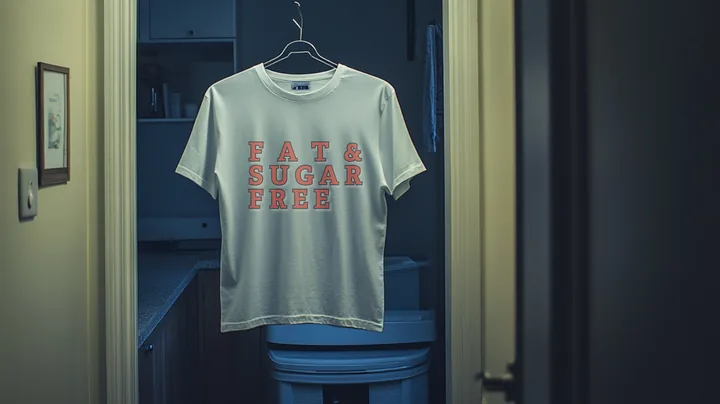
From fat free to fast fashion
We have seen this before. In the 1990s, "fat free" covered the supermarket aisle. Today it is "protein". Yes, information on labels changed what people bought. It did not change what people consumed. Processed calories continued to dominate, obesity and chronic disease steadily rose, and our access to information, food labels and awareness of health has never been higher.
"Fast fashion" is almost 40 years old. It entered public awareness at the turn of the 1990s. The term is usually traced to a New York Times article by Anne-Marie Schiro, published 31 December 1989, describing Zara's arrival in New York, and the model that could move a garment from designer's sketch to store rack in about 15 days. By the 2000s, retailers moved from a few collections a year to dozens of drops, training shoppers to buy more, more often, and treat garments as near-disposable.
Importantly, when it caught the public eye and sparked backlash, it was not the environmental impact. The 2013 Rana Plaza factory collapse in Bangladesh became a turning point for public scrutiny of labour conditions, while mounting evidence of textile waste and emissions drove a sustainability countermovement.
Since then, the focus on human rights tightened, yet the trend continued. Online-native players, Boohoo, ASOS, and then Shein and Temu, compressed cycles further, using algorithms and on-demand manufacturing to launch thousands of new styles a week at rock-bottom prices.
Information loses to price, convenience and reward at the moment of decision.
France has just chosen its weapons, and information is not among them.
On 29 June 2026, after two and a half years of debate, parliament adopted the first national law aimed at ultra-fast fashion. It awaits President Macron's signature, with fee levels and thresholds still to be fixed by implementing decrees, but the design is settled. The law does three things:
- An escalating per-item charge, starting between €0.25 and €6 and rising to as much as €10 per item by 2030, capped at half the product's pre-tax price
- A ban on advertising for ultra-fast fashion brands, extending to promotion by social media influencers, though Brussels has questioned whether this part complies with single-market rules
- Mandatory on-site messaging encouraging moderation, reuse and repair
Notice the order. Price first, prohibition second, information last. After four decades of awareness, the legislature reached straight past the label to the price tag.
The disposal moment
The battery passport is where the theory will work. It arrives first, mandatory from February 2027, and EV and industrial batteries never pass through a household decision: they move between professionals with an economic reason to scan them. It is unlikely many Tesla owners will be performing at-home battery changeovers. A running shoe is decided at home: hallway, seconds, next to a bin.
That decision is outside the standards. All six define the product as it is placed on the market. Updating a passport when an item comes back is technically possible. Nothing requires it, and nothing rewards it.
No standard can bring a customer back through the door.
None of this makes the passport pointless. When an item does come back, the passport multiplies its value: composition data a recycler can trust, an audit trail a regulator can check, cheaper sorting, faster verification. It is a land registry: essential infrastructure, not the reason anyone builds a house.
The binding constraint on circularity is not information about the product. It is the environment around the person holding it. Items leave the loop at the disposal decision inside the home, and that moment is currently designed by nobody. Globally, around three quarters of textiles end in landfill or incineration, and less than 1% is recycled into new clothing.
Our research splits the population roughly three ways. Around 18% act prosocially regardless of design. Around a third are disengaged at any realistic level of effort. The half in the middle are contingent: they participate when effort drops and a reward appears at the moment of decision. Information reaches the first group, who did not need it. Design reaches the middle, which is where the volume is.
Deliberate design means a visible place to bring the item in a shop the customer already visits, a trigger at the point of decision, and a reward that beats the convenience of the bin.
The six standards took two years and more than 200 committee meetings, and I am glad they exist. Who is doing the equivalent work on the 30 seconds in front of the household bin?